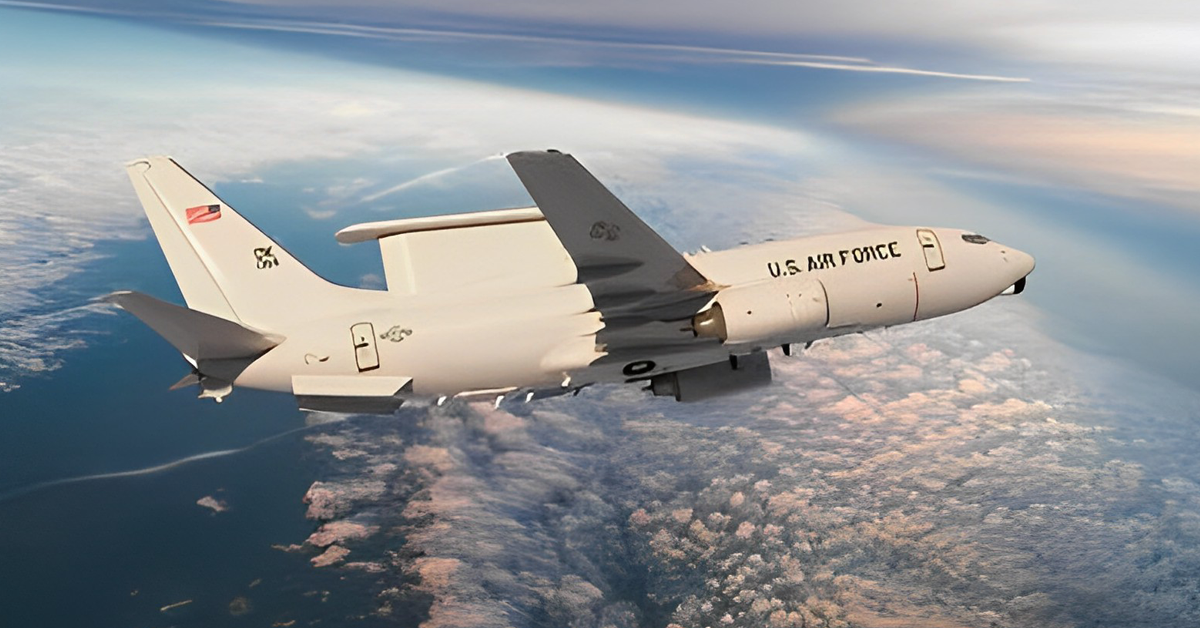
E-7 comes with an Agile software design and open systems architecture to facilitate the integration of new capabilities and serves as an integrated command-and-control node to provide warfighters with multidomain awareness in complex operational environments, Boeing said Tuesday.
Based on the Next-Generation 737, the aircraft uses a multirole electronically scanned array sensor designed to help detect multiple maritime and airborne threats at long ranges.
Work on the E-7A Rapid Prototype program under the sole-source undefinitized contract action will occur in Seattle through August 2024, according to the Department of Defense.
The Air Force Life Cycle Management Center at Hanscom Air Force Base in Massachusetts is obligating $134 million in research and development funds for fiscal years 2022 and 2023.
“It is the only advanced aircraft that is capable of meeting the U.S. Air Force’s near-term Airborne Early Warning & Control requirement while enabling integration across the joint force,” said Stu Voboril, E-7 program vice president and general manager at Boeing.
Air forces from Australia, Turkey, South Korea and the U.K. also operate the E-7 aircraft.
AeroVironment has tapped Robert “Rob” Smith as executive vice president and chief operating officer. Smith’s appointment, which will become official April 13, underscores…
GreyNoise Intelligence has launched Command and Control Detection, a new intelligence module designed to identify active cyber compromises using outbound…
BigBear.ai has named Jo Ann Bjornson as chief human resources officer and Alex Thompson as chief corporate affairs officer. The new leadership appointments…